
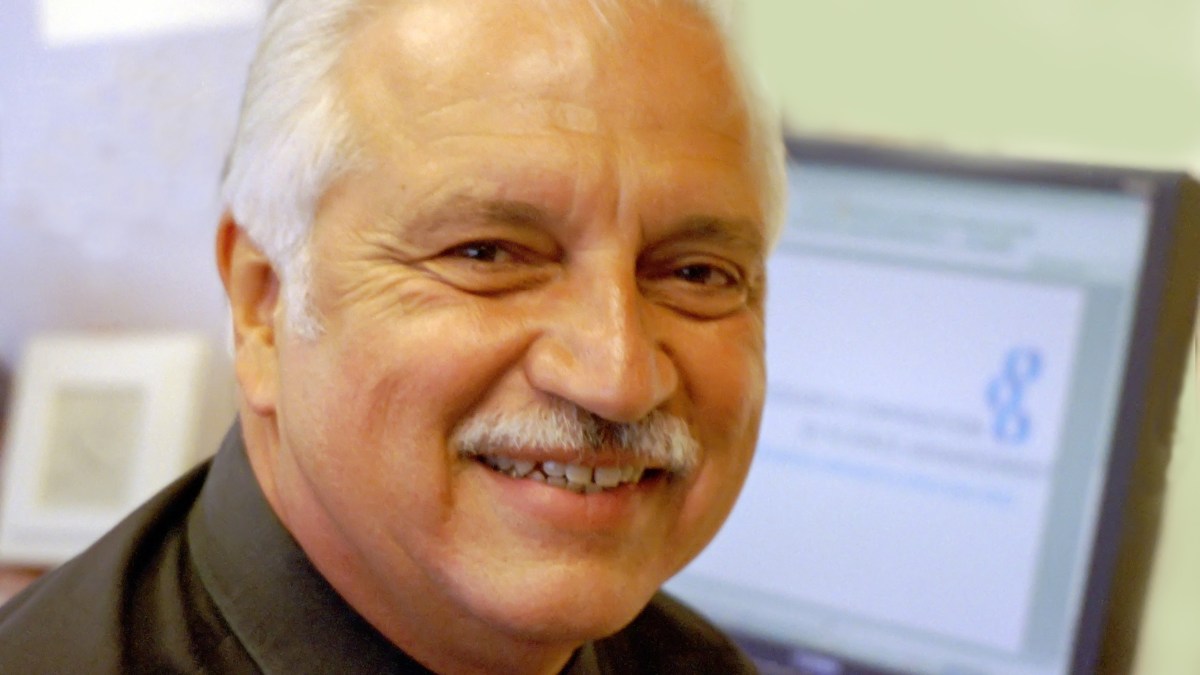
James M. Gentile, who led Research Corporation for Science Advancement from 2005 to 2013, died January 9 in Zeeland, Michigan.
Gentile joined RCSA as president and CEO in 2005 after 29 years as a professor and dean at Hope College in Holland, Michigan. He retired in early January 2013 to return to his academic roots as a professor and dean of the sciences at Hope College.
Highlights of his eight-year tenure at RCSA include the creation of Scialog, continued support for the innovative LBT and LSST telescopes promoted by his predecessor John P. Schaefer, the celebration in 2012 of RCSA’s centennial, advocacy of excellence in science education, and increasing RCSA’s impact by cultivating more partnerships with other organizations.
He was also the driving force behind changing the foundation’s name from Research Corporation to Research Corporation for Science Advancement, which he felt would clarify and emphasize the foundation’s mission.
“Jim loved discussing science and was a very creative thinker,” said RCSA Vice President & CFO Danny Gasch. ‘A conversation with Jim would often lead to unexpected places.”
Jack Pladziewicz, a former program officer and RCSA vice president who served as interim president after Gentile’s retirement, said Gentile understood the transition that was occurring in science toward bigger, more complex and multifaceted projects requiring more teamwork and collaboration.
“That was something Jim really bought into, and he pushed the foundation to move in that direction more than they previously had,” he said. “It was timely, because that’s the way science has gone. Big science now is done by teams, and bigger, more important projects can be attacked because you have more people working on something.”
RCSA Senior Program Director Silvia Ronco agreed.
“Under Jim’s leadership, RCSA’s programs placed more emphasis on community building and interdisciplinary collaboration,” she said. “We expanded the number of Cottrell Scholar Awards and launched the Cottrell Scholars Collaborative to encourage the community to work together – and, in fact, many of those projects have had tremendous national impact.”
RCSA Senior Program Director Richard Wiener said although many people have played a role in building the Scialog program, Gentile’s vision was where it began.
“He envisioned a program for scientists to engage in dialogue, innovate, and form new interdisciplinary collaborations to address critical societal issues such as the need for clean energy,” Wiener said. “He coined the name Scialog and even put it on his license plate.”
RCSA played a key role in Gentile’s career as a researcher and educator. In 1976, as a young researcher, Gentile submitted a joint proposal with another researcher for funds to purchase an ultracentrifuge. That purchase enabled him to do the RNA polymerase research that went on to receive 30 years of continuous federal funding.