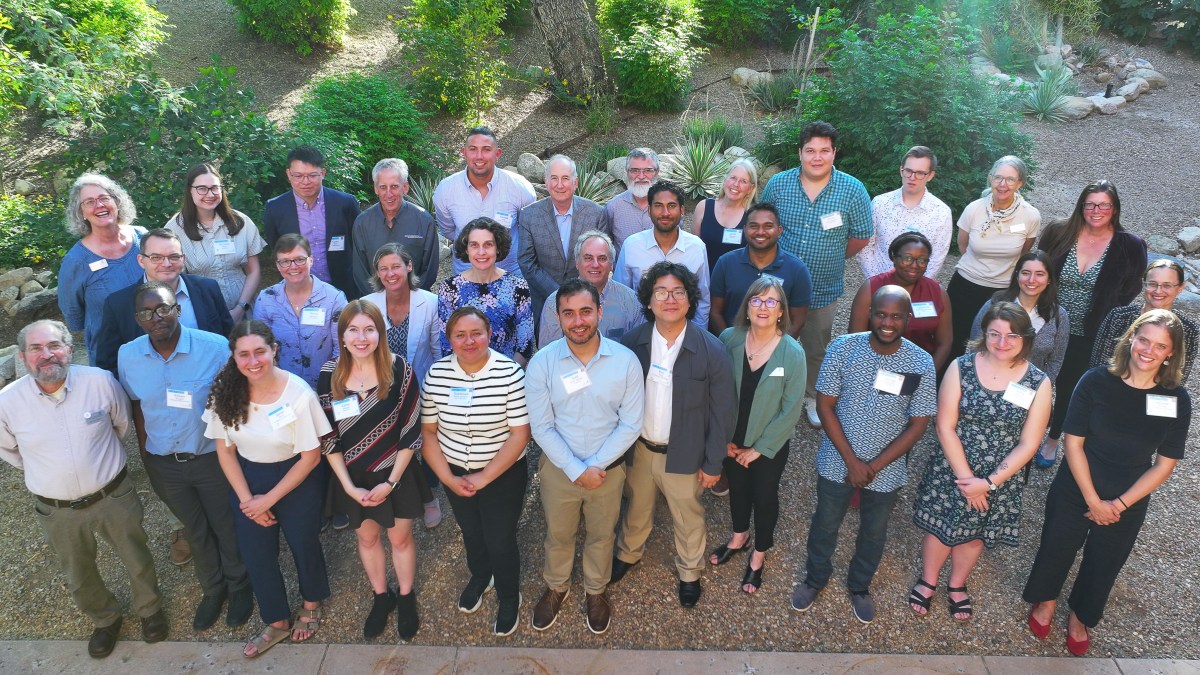
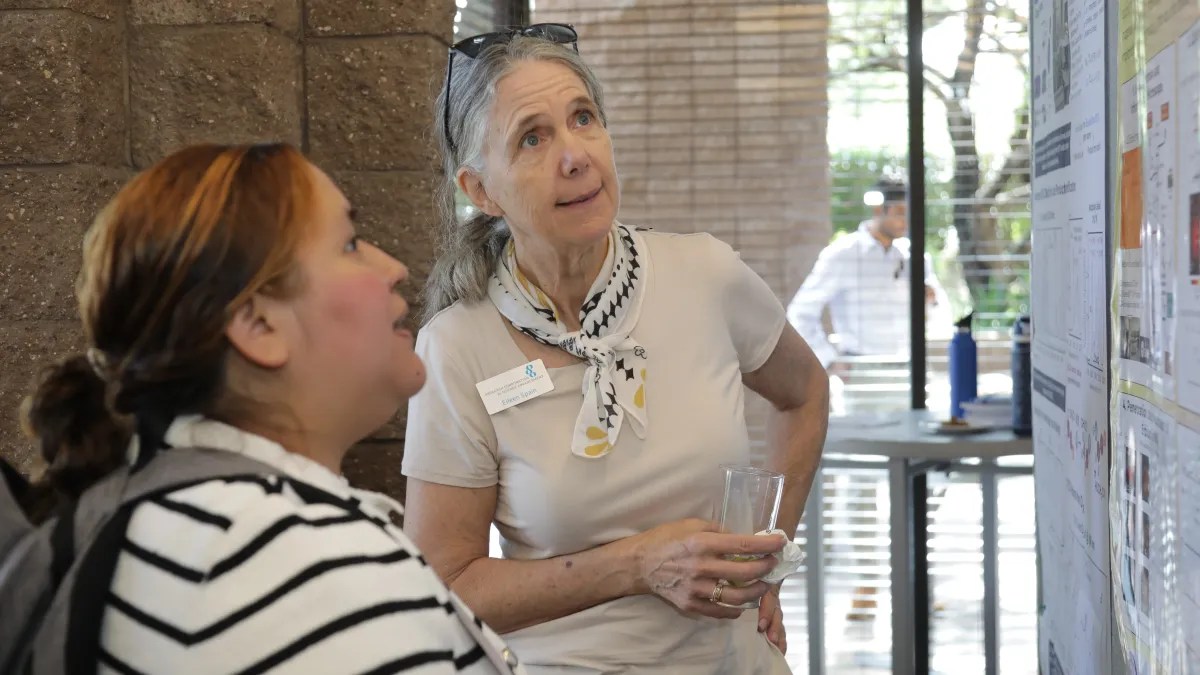
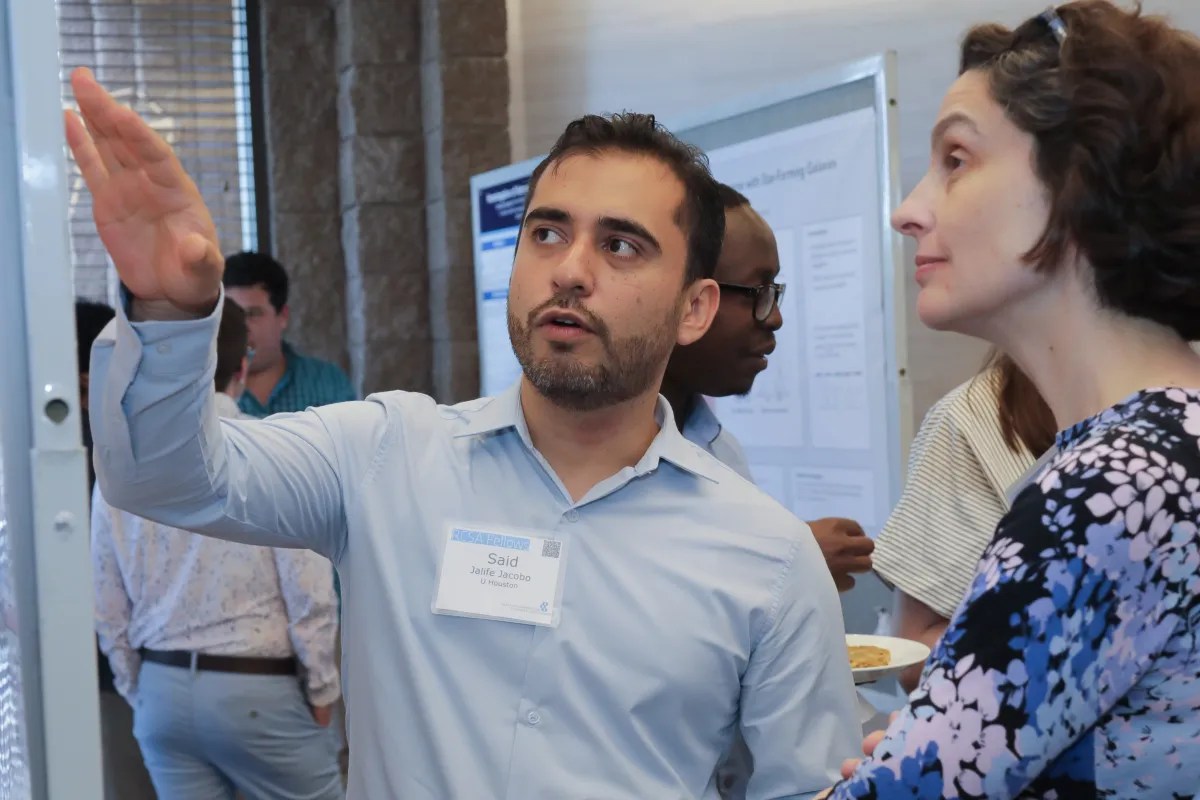
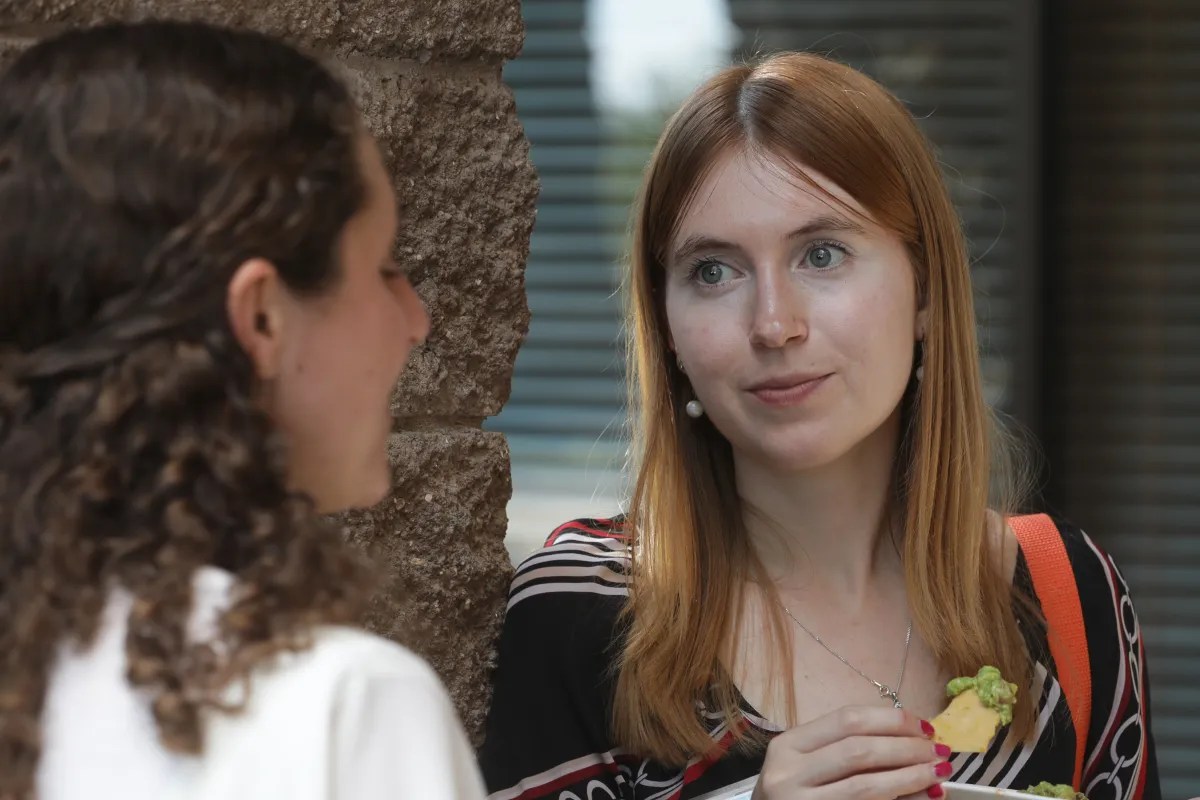
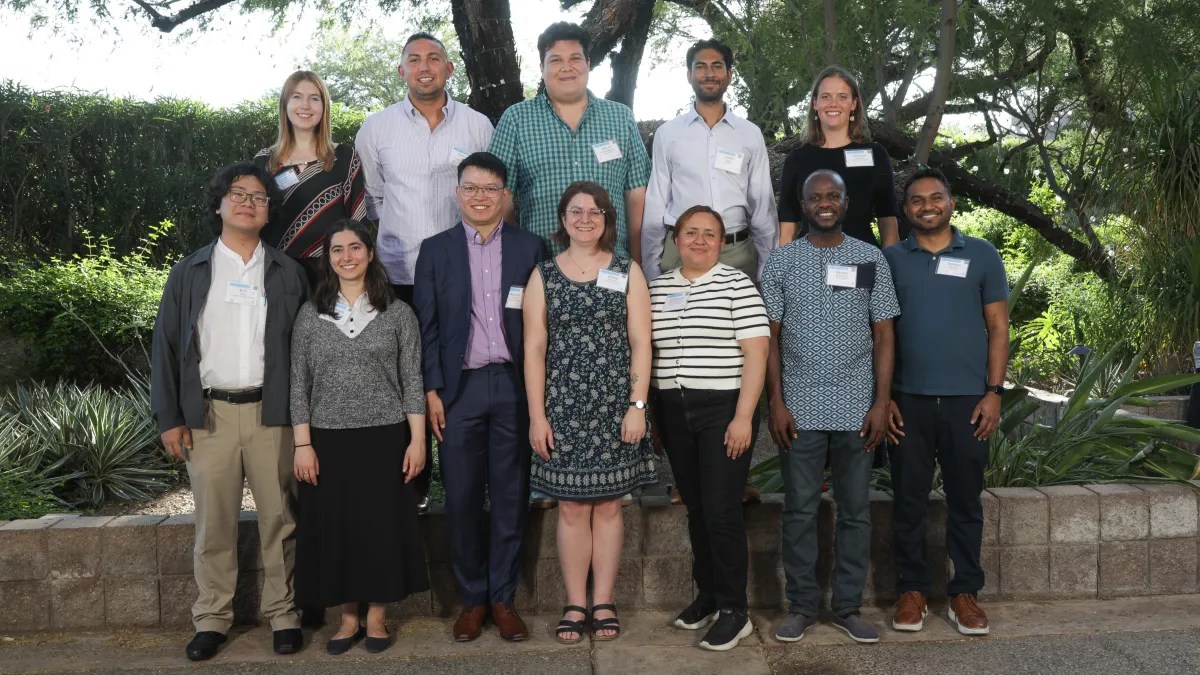
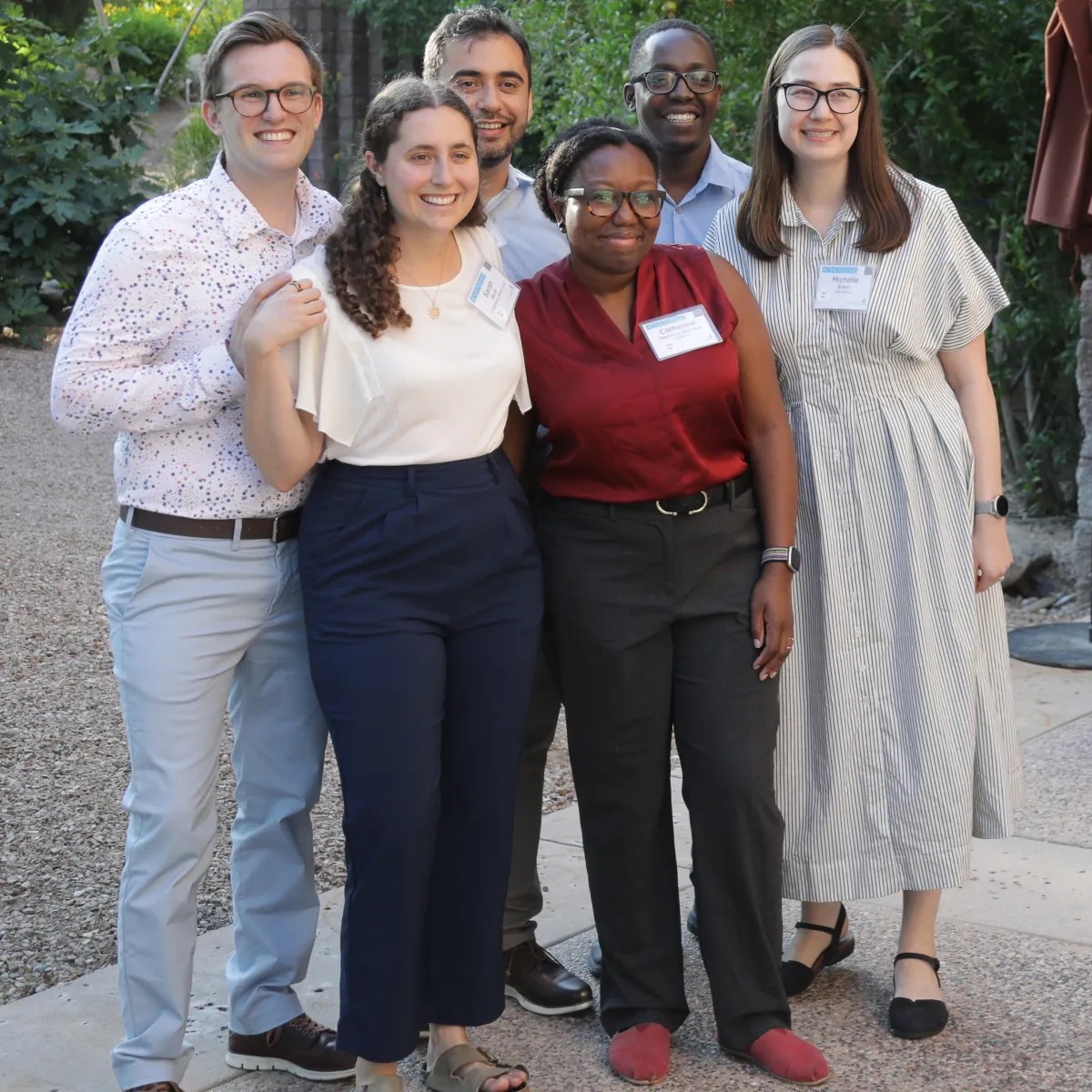
Thirteen new RCSA Fellows joined experienced faculty members, program advisers, and a growing community of peers making the postdoc-to-faculty transition June 3-4, 2025, at the 2nd Annual RCSA Fellows Conference in Tucson.
The RCSA Fellows Initiative, launched last year, is a multiyear program of job search preparation, professional development, and community building that aims to increase faculty excellence in the physical sciences in the United States and Canada. The program includes a mock interview at a host institution, structured feedback and guidance throughout the job search process, and participation in a cross-disciplinary network of Fellows and advisers at various stages in their careers.
While last year’s conference was designed to help prepare the inaugural class of eight Fellows for upcoming faculty job searches, this year’s meeting had two tailored tracks: one for new Fellows just embarking on their journey toward the professoriate, and another for Fellows in the second year of the program who are interviewing, negotiating job offers, or starting new roles as faculty in the fall.
“It’s great to see the Fellows bonding and supporting each other,” said RCSA Program Director Eileen Spain, who leads the initiative. “Last year’s Fellows who are actively interviewing or have just secured positions provided valuable, up-to-the-minute advice and perspectives to the newer Fellows.”
The conference also offered hope for prospective STEM faculty looking to launch their careers as funding is cut and the integrity of science and academic institutions is under attack.
RCSA President & CEO Dan Linzer told the Fellows that he is seeing unprecedented collaboration among science-supporting foundations to identify priority areas and work together to support the nation’s research enterprise. He said the staff and Board of RCSA are listening to RCSA’s community and analyzing how best to leverage the foundation’s strengths and resources.
“All of us are committed to your success,” he said. “You are our mission.”
In her keynote talk, “Maintaining Your Footing and Focus in the Midst of Uncertainty.” Cottrell Scholar 2015 Jen Heemstra, Washington University in St. Louis, spoke to the Fellows regarding their two roles: as current postdocs navigating uncertainty in their career prospects, and as future leaders of research groups with students to teach and mentor.
“The good news is that coping with uncertainty is something you already know how to do,” she said. “The important thing is to reflect and unpack those skills you can apply to everything that’s happening in the world around you.”
She outlined four important steps in coping with uncertainty: recognizing the stress and grief you might be experiencing, knowing you have done hard things before and can do them again, focusing your energy on factors you can control, and practicing self-care.
“Life is stressful under any circumstances, and especially right now, but you can still focus on your purpose and your values and take care of yourself,” she said.
She also emphasized the importance of spending time in groups such as the RCSA Fellows community that are “supportive and kind and collaborative and lift each other up.”
She led an active learning activity to help the group reflect on their experiences with uncertainty and think deeply about what they can do to grow their coping skills.
Carmala Garzione, Dean of the College of Science, University of Arizona, gave an administrator’s perspective in her talk, “Navigating the Fast-Changing Federal Funding Landscape: Strategies for Research Success.”
She explained the important role of deans in hiring and supporting faculty and said that in spite of current concerns over student visas, indirect cost caps, and changes in federal funding priorities, universities are still hiring faculty, still training students, and are still cost-effective places to do research.
She emphasized the importance of adaptability, collaboration, and proactive strategies to navigate funding challenges and offered guidance for faculty concerned about funding their research.
“Step back and think of the people in your field who are wildly successful,” she said. “They’re creative. They tend not to be constrained by prior discoveries. They are able to invent new ideas or reinvent their own research. They pivot into new areas of opportunity, making them adaptable to the types of changes we’re experiencing today. And they often have an ability to collaborate and build partnerships.”
Most of all, she urged Fellows not to panic.
“Remember the passion that drew you to science in the first place, remember why our work matters, and stay focused on what drives you,” she said. “That is what will keep you going through challenges like we’re facing today.”
Following the talks, conference Facilitators led group sessions tailored to the needs of both the 2024 and 2025 cohorts, ranging from help for new Fellows in creating competitive job-search materials to advice for those who are soon starting faculty positions, including time management, developing course syllabi, and developing a research strategy.
“It gave me a clearer picture of faculty life across institution types from R1s to liberal arts colleges, highlighting differences in expectations and support,” one first-year Fellow said. “It helped me reflect on how my values and mentoring goals align better with environments that prioritize both research and teaching. This alignment will definitely shape how I target and prepare for upcoming faculty applications.”
Fellows also received a one-on-one session with a mentor to get personalized feedback on their application materials.
Facilitators were Scialog Signatures of Life in the Universe Facilitator Daniel Apai, University of Arizona; Cottrell Scholar 2009 Penny Beuning, Northeastern University; Cottrell Scholar 2009 Maura McLaughlin, West Virginia University; and Megan Nuñez, Wellesley College.
Also offering advice and mentorship at the conference were Advisory Committee Members Cyndi Atherton, consultant; Holland Awardee Luis Colón, University at Buffalo SUNY; RCSA Board Member Amy Landis, Colorado School of Mines; and Cottrell Scholar 2006 Keivan Stassun, Vanderbilt University, who developed the successful RCSA-funded Cottrell Scholar Collaborative project that evolved into the RCSA Fellows initiative.
In the conference’s final session, last year’s Fellows shared lessons from a year on the faculty job market, including their experience with their mock interviews, research seminars, chalk talks, and meetings with faculty and staff at their host institutions.
They stressed preparation and flexibility, highlighting some of the unexpected questions and issues that had come up in a variety of in-person, online, and hybrid meetings and interviews.
2024 RCSA Fellow Catherine Denning-Janace said her mock interview led directly to her success securing a faculty position.
“Someone from across the country vouched for me because they had seen my proposal, seen my research and chalk talk, all of it,” she said. “My advice to the new Fellows is that the science world is very small, so take the mock interview seriously, because you never really know what people will say about it and how it could benefit you in the future.”
The 2024 Fellows also stressed the importance of feedback and self-reflection in the path to the professoriate.
“This whole experience made me understand my research “brand” a lot better and helped me pick a long-term research direction and goals for myself,” Michelle Brann said.
Nominations for the 2026 class of RCSA Fellows (and for institutions wishing to host a mock interview) will open on RCSA’s website on July 22.
RCSA Fellows nominees must hold a Ph.D. in chemistry, physics, or astronomy, or allied fields, and currently be a postdoctoral scholar who does not hold a tenure-track faculty position. Applications are initiated by a Cottrell Scholar, Holland Awardee, Scialog Fellow, or Scialog Facilitator from the physical sciences and are due by September 8, 2025.