
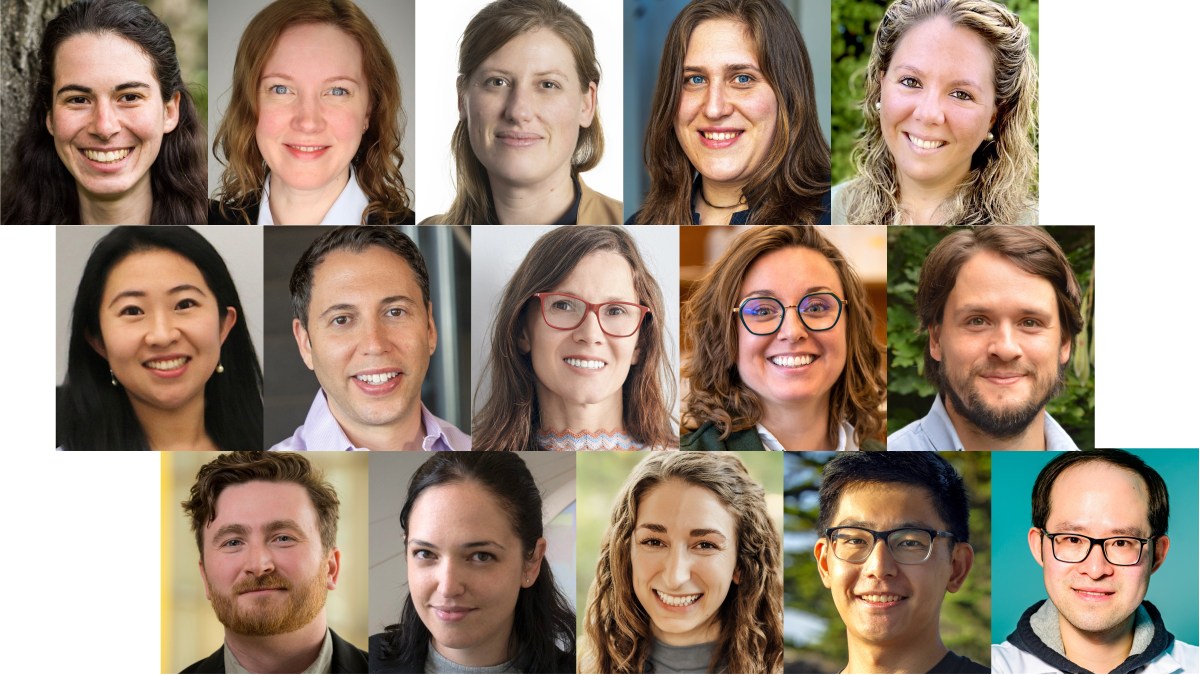
Six cross-disciplinary projects to advance fundamental understanding of how neural systems adapt to today’s rapid environmental changes have won awards in the second year of Scialog: Neurobiology and Changing Ecosystems, cosponsored by Research Corporation for Science Advancement, Allen Family Philanthropies, the Frederick Gardner Cottrell Foundation, and The Kavli Foundation.
Each of the 17 awards, to 15 researchers from the United States and Canada, is for $60,000 in direct costs.
This Scialog initiative was launched to spur novel interdisciplinary research into the complex processes behind neurobiological adaptation to stressors such as exposure to pollution, toxins, and increasingly unpredictable environments.
“We are conducting a vast, uncontrolled experiment on every living thing on the planet, from the very biochemistry of our brains to the way organisms sense the world around us,” said RCSA President & CEO Eric Isaacs. “We need better ways to measure and model how organisms shaped by millions of years of evolution can be resilient in the face of anthropomorphic changes to the environment.”
The conference, held March 12-15 in Tucson, Arizona, engaged 50 early career chemists, physicists, climate scientists, neurobiologists, and behavioral ecologists in a series of conversations to identify bottlenecks to progress in the field and to brainstorm potential areas of inquiry where new, cross-disciplinary research is needed.
Scialog, created in 2010 by RCSA, is short for “science + dialog.” Scialog initiatives include three annual conferences designed to stimulate intensive interdisciplinary conversation and community building around a globally important scientific theme. At the end of each year’s meeting, teams of two to three researchers who have not previously collaborated compete for seed funding for innovative projects based on ideas that emerge at the three-day conferences.
Scialog’s unique meetings begin with a pre-conference survey asking Fellows how well they know other participants and which topics interest them. RCSA uses this information to algorithmically assign Fellows to breakout and mini-breakout sessions, ensuring they interact with a wide range of scientists and perspectives across disciplines, research approaches, and backgrounds. Participants are encouraged to learn about one another’s work and explore novel problems they could research together and how they might collaborate, combining their diverse approaches and methods.
“This is how we mix the deck,” said RCSA Senior Director Andrew Feig, who leads the initiative. “Conversations among scientists with disparate skills and perspectives are an exercise in learning how to communicate across silos and can result in breakthrough ideas.”
An expert group of scientists served as Facilitators to guide discussions at the 2026 conference. They included: Carlos Baiz, University of Texas at Austin; Christina Grozinger, Penn State University; Amanda Lauer, Johns Hopkins University School of Medicine; Jeff Riffell, University of Washington; Kim Rosvall, Indiana University; Joellen Russell, University of Arizona; Wolfgang Stein, Illinois State University; and Stacey Tecot, University of Arizona
Russell, an oceanographer and climate scientist at the University of Arizona, emphasized the critical role of the ocean in driving the weather everyone experiences in her keynote talk, “Climate and the Deep Blue Sea.”
Because 72% of Earth is water, and the ocean absorbs 93% of the warming Earth’s energy imbalance, coupled ocean–atmosphere models are not just preferable but indispensable to truly accurate weather forecasting. She described how oceanographers have deployed nearly 1,000 robotic floats in oceans worldwide, transforming our ability to quantify ocean warming, carbon uptake and outgassing, and the changing winds and mixing that feed back onto climate and weather.
She said this data has helped illuminate the role of the Southern Ocean – where powerful westerly winds help bring deep, centuries‑old, carbon‑rich water to the surface – as a critical engine of both heat and carbon exchange with the atmosphere.
Russell tied the physics of climate directly to human health and wellbeing, using Tucson as a vivid case study. With the last 10 years on record as the 10 hottest years on Earth, and Tucson and Phoenix among the fastest‑warming cities, relentless warming is reshaping how and where people live, work, and raise children. In Tucson – which at the time of the conference was facing a record-shattering spring heat wave – it means weeks more each year of “cabin fever season” with temperatures over 100°F, walking your dog at 5 a.m., and not letting your kids go outside to play.
Russell noted that the U.S. has reduced its carbon emissions from 22% to 7% of global emissions since 2007 and stressed that practical, deployable, evidence-based solutions to the climate crisis are in our hands today. These include aggressively shifting away from burning fossil fuels, modernizing grids, improving energy efficiency, and tightening pollution controls, as well as “boring but powerful” systems like better waste, water, and land management, and protecting ecosystems that store carbon.
She closed her remarks with a call to action, insisting that better data and models are not enough unless scientists communicate what they know. She urges researchers to deliberately set aside 5% to 10% of their time for science communication as a core professional responsibility
“I know it’s not what you signed up for, and it can be exhausting, but has to be done,” she said, noting that peer-reviewed papers behind paywalls and lectures to a few hundred students cannot match the scale of the climate problem. She highlighted her work founding Science Moms and their recent high-impact Super Bowl ad.
“It’s not about politics,” she said. “It’s gotten hot enough here on Earth, and everyone is worried, which is why the U.S. is cutting emissions as fast or faster than Europe, even without regulation.”
The conference also featured updates from collaborative teams funded in the first year of the initiative. One team is using AI models to analyze and characterize animal behavior across different species, tracking changes in behavior of jellyfish and stickleback fish under temperature perturbations. Another team is studying the impact of nutritional stress and pollutant exposure on honeybee larvae, while a different group is investigating the impact of heat stress on reproduction and parental care among three very different organisms: mice, stickleback, and dart frogs. One project is looking at how temperature-dependent fish grazing behavior affects zooplankton mortality and, ultimately, global ocean carbon cycling, with results to be incorporated into climate models, while another is examining how heat-sensitive TRPV1-expressing sensory neurons — from nematodes to frogs, alligators, mice, and humans — differ in function, resilience, and stress responses across species. Another group is tracing how nano/microplastics move through organisms, interact with brain immune cells, and disrupt membrane organization in ways that may parallel neurodegenerative protein aggregates, as in Alzheimer’s disease.
“Even after less than a year of work, it’s amazing to see the progress these teams have made,” said Feig.
The third and final meeting of Scialog: Neurobiology and Changing Ecosystems is scheduled for March 11-14, 2027. The applications process to participate as a Fellow at next year’s meeting will be opened in May 2026 and should be submitted no later than September 1, 2026, for full consideration.
The following NCE teams will receive 2026 Scialog Collaborative Innovation Awards:
Foraging in an Impaired Sensory Landscape: Using Sensory Biology to Inform Ecosystem Impacts of Hypoxia in Aquatic Environments
- Mara Freilich
Earth, Environmental, and Planetary Sciences / Applied Mathematics
Brown University
Cosima Porteus
Biological Sciences
University of Toronto
Conserved Epitranscriptomic Signatures of Stress
- Ina Anreiter
Biological Sciences
University of Toronto Scarborough - Elizabeth Heath-Heckman
Microbiology, Genetics, and Immunology
Michigan State University - Valerie Tornini
Integrative Biology and Physiology / Institute for Society and Genetics
University of California, Los Angeles
Too Fast and Too Furious: Tradeoffs in Stress-Induced Accelerated Neurodevelopment
- Ling Hao
Chemistry and Biochemistry
University of Maryland, College Park
Valerie Tornini
Integrative Biology and Physiology / Institute for Society and Genetics
University of Califormia, Los Angeles
Eviatar Yemini
Neurobiology
University of Massachusetts Medical School
Identifying Mechanisms of Social Resiliency to Heat Stress
- Ioana Carcea
Pharmacology, Physiology and Neuroscience
Rutgers, The State University of New Jersey
Chelsea Cook
Biological Sciences
Marquette University
Elizabeth Heath-Heckman
Microbiology, Genetics, and Immunology
Michigan State University
Detection and Prediction of Environmental Disruption by Animal Collectives
- James Crall
Entomology
University of Wisconsin – Madison - Matthew Lovett-Barron
Neurobiology
University of California, San Diego - Orit Peleg
Computer Science / BioFrontiers Institute
University of Colorado Boulder
High-Throughput, Multi-Modal Screening of Environmental Stressors on the Human Brain
- Rebecca Pinals
Chemical Engineering
Stanford University - Eric Sun
Biological Engineering
Massachusetts Institute of Technology - Yuecheng (Peter) Zhou
Materials Science and Engineering
University of Illinois Urbana-Champaign